
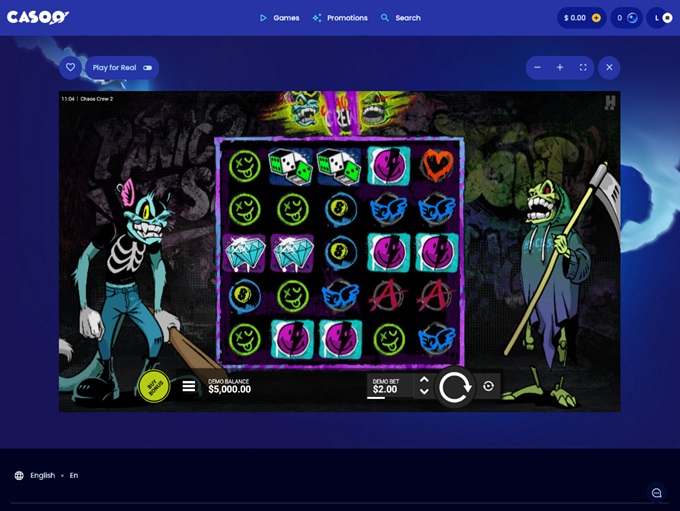
Installing a real-money gaming app on your phone in Germany involves entrusting your funds, your identity, and your privacy to a digital system. We have spent years dissecting the cryptographic protocols and verification systems that distinguish legitimate platforms from risky operators. Once you understand these mechanisms, you no longer are a passive user and transform into someone who can spot a secure environment, like the Casoo Casino mobile experience, with confidence.
The Core of Portable Encryption Standards
Casino apps today use encryption to build a tunnel between your smartphone and the gaming servers that no third party can enter. Transport Layer Security (TLS) 1.3 is now the baseline requirement for any operator committed about protecting German players. This protocol maintains every spin, card flip, and financial transaction unreadable to anyone attempting to intercept the data stream on public or private networks.
Without encryption, your personal details and payment credentials would travel across the internet in plain text, vulnerable to packet-sniffing attacks. We always confirm that an app uses 256-bit AES encryption, the same standard international banks trust. That level of cryptographic complexity makes brute-force decryption mathematically impossible with current computing technology, so you can focus on playing instead of worrying.
How SSL Pinning Prevents Man-in-the-Middle Attacks
One attack vector involves someone inserting themselves between your device and the casino server. SSL pinning bakes the server’s trusted certificate directly into the application binary and rejects any connection that does not match the original signature. We consider this a critical feature because it neutralizes compromised certificate authorities and rogue Wi-Fi hotspots that attempt to decrypt your traffic by impersonating a legitimate server.
End-to-End Protection for Payment Data
When you deposit funds using Sofort, Giropay, or a German bank transfer, the app needs to compartmentalize financial credentials from the gaming logic. We search for tokenization systems that replace your sensitive IBAN or card number with a single-use algorithmic token. This architecture means the casino platform never stores your raw banking details on its operational servers, which drastically limits the damage radius of any theoretical data breach.
Random Number Generator Integrity and Fairness Verification
True randomness is a security feature because foreseeable results can be leveraged to drain operator funds or alter player outcomes. We evaluate whether an system uses a CSPRNG initialized with hardware randomness sources. The physical randomness from your phone’s motion sensor or microphone static can drive the algorithm, producing outcomes that pass the most rigorous statistical randomness test suites like NIST.
External testing facilities licensed by German regulators regularly inspect the RNG system to verify it has not changed or been compromised after release. We prize certifications from organizations that extract live game records directly from production servers rather than examining a sanitized demo environment. This constant surveillance creates a open inspection log that demonstrates every card dealt and every slot position is genuinely unpredictable and unbiased.
Verifiable Fairness Systems in Modern Gaming
Some platforms now implement cryptographic commitment protocols where the platform releases a hash seed before you play. After the round ends, you obtain the initial seed to validate autonomously that the output was predetermined fairly. We find this mathematical transparency convincing because it eliminates the need for blind trust, letting skilled players execute their own validation scripts against the disclosed hash results.
Application Integrity and Tamper-Resistant Systems
We highly recommend against acquiring casino APK files from unofficial websites, because official app store distributions include code signing that verifies the binary has not been modified. The operating system examines the developer’s digital signature against a trusted certificate chain before enabling installation. Any embedded malware or modified game logic would break this signature, leading to the installation to fail or generating a security warning that safeguards you from altered malicious versions.
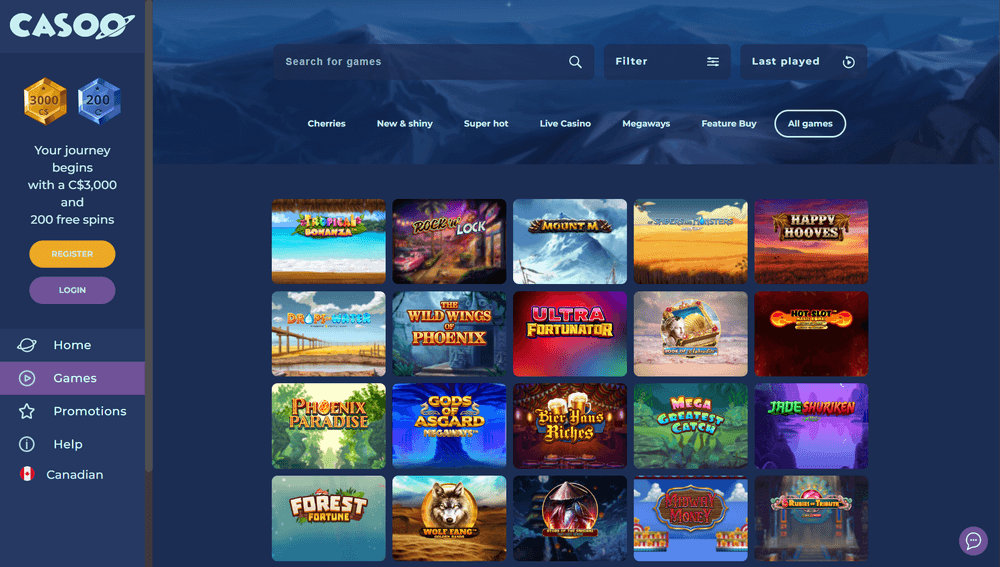
Runtime application self-protection continuously monitors the execution environment for signs of tampering while you play. We utilize techniques such as checksum verification of critical code sections and identification of debugging tools or hooking frameworks like Frida. If the app detects that it is running on a rooted or jailbroken device with elevated privileges, it should decline to launch or block real-money features, because that environment cannot guarantee the integrity of the game logic.
Secure Code Obfuscation Methods
Developers use control flow obfuscation and string encryption to the compiled application to frustrate reverse engineering attempts. We understand that determined attackers will eventually deobfuscate any binary, but the goal is to raise the time and cost required to find exploitable vulnerabilities. This economic barrier directs malicious actors toward softer targets, indirectly protecting the player base through sheer mathematical inconvenience for the adversary.
Safe Payment Gateways and Fund Isolation
We prioritize the system separation between the gaming engine and the cashier system as a core security principle. When you make a deposit through the Casoo Casino app, the transaction should pass through a PCI DSS Level 1 certified payment processor. This segregation means the gaming operator never handles your raw payment instrument data; they only obtain a unique token and a confirmation of the available balance for gameplay.

Withdrawal protection mechanisms add another defensive layer by enforcing a closed-loop policy. The system automatically sends back funds to the original deposit method whenever technically viable. We view this as a strong anti-money laundering control and an account takeover countermeasure, because a hacker who compromises your login still cannot redirect your balance to an unlinked bank account without requiring a full re-verification of the new payment method.
Two-Factor Authentication for Cashier Actions
Even after typing your password, sensitive financial operations should require a time-based one-time password from an authenticator app. We recommend switching this feature on immediately because SMS-based codes remain exposed to SIM-swapping attacks that have targeted German mobile users. A hardware-independent TOTP generator on your device generates a rotating code that never goes through the telecom infrastructure, removing that attack vector completely.
System Oversight and Breach Identification
Behind the user interface, security operations centers analyze data flows for deviations that suggest credential stuffing or distributed denial-of-service attacks. We rely on machine learning models that establish a baseline for normal player behavior and flag deviations such as hundreds of login attempts from a single IP range targeting German accounts. These automated defenses stop harmful data at the network edge before it ever arrives at the authentication server, maintaining service availability for legitimate players.
Access control on API endpoints prevents brute-force attacks against login forms and password reset functions. After a threshold of failed attempts, the system imposes a progressive delay or offers a CAPTCHA challenge to separate human users from automated scripts. We value implementations that use proof-of-work challenges rather than intrusive image recognition tasks, maintaining a smooth user experience while still depleting the computational resources of attacking bots.
Account Protection and Session Management
We evaluate how an application manages authentication tokens after you log in. JSON Web Tokens with limited expiration periods and automatic refresh mechanisms reduce the damage window if a token is somehow intercepted. The app should immediately terminate all active sessions when you change your password or enable additional security features, so a lost or stolen device does not become a permanent skeleton key to your gaming account.
Device fingerprinting runs silently in the background, creating a unique identifier from your hardware characteristics, operating system version, and installed fonts. We view this as a passive security layer that activates step-up authentication when a login attempt arises from an unrecognized device profile. If someone in a different German city tries to enter your account from a new phone, the system flags the anomaly before any funds can move.
Fingerprint and Face Unlock for App Access
Modern smartphones feature fingerprint scanners and facial recognition systems that work directly with the casino application. We encourage you to enable this feature because it ties account access to your physical presence. Even if an attacker observes your PIN code through shoulder surfing on the Berlin U-Bahn, they cannot circumvent the biometric gate without your actual fingerprint or face, rendering the stolen credentials useless.
Inactivity Timeout and Session Termination
A secure app must balance convenience with protection by ending idle sessions after a configurable period. We suggest setting the auto-lock to five minutes or less, particularly if you often game on a tablet shared within a household. The session termination should erase all cached sensitive data from the device memory, stopping forensic recovery tools from pulling session tokens or balance information from the RAM after the app closes.
Player Protection Controls as Security Features
We consider deposit limits, loss limits, and session timers as security tools that protect your financial well-being. These tools establish a safety net that stops impulsive decisions during emotional states from causing lasting damage. A properly implemented responsible gaming module operates independently from the main gaming logic, meaning that even if the core platform experiences a glitch, your pre-set boundaries remain enforced at the account level without exception.
Self-exclusion registrations must transmit instantly across the operator’s entire ecosystem, including the mobile app. We check that the OASIS blocking system integration functions in real time, preventing a self-excluded player from simply switching to the mobile version after locking their desktop account. This unified exclusion architecture is a legal requirement in Germany and a genuine security measure that safeguards vulnerable individuals from circumventing their own protective decisions.
Identity Confirmation and KYC Compliance in Germany
The German State Treaty on Gambling establishes strict Know Your Customer requirements that actually bolster your security. A proper identity check is not an inconvenience, it is a shield against synthetic identity fraud. When the platform validates your identity document and address through automated AI analysis, it makes sure that nobody can withdraw your winnings to a fraudulent account registered under a stolen name.
Biometric matching during registration juxtaposes your live selfie with the photo on your official identification document. This liveness detection technology blocks bad actors from using static images or deepfake videos to slip past security. The system measures micro-movements and light reflections that only a real, three-dimensional human face can produce, blocking automated bot attacks.
Digital Document Analysis Technology
Optical Character Recognition engines retrieve data from your uploaded ID card or passport in seconds, but the real security value resides in the forensic analysis of the document itself. Algorithms check for hologram integrity, font consistency, and microscopic pattern interruptions that reveal physical tampering. This machine-learning approach identifies sophisticated forgeries that a human reviewer might miss during a manual check, ensuring the player community safer.
Data Reduction and GDPR Alignment
Operating inside the German market demands strict adherence to the Bundesdatenschutzgesetz alongside the broader GDPR framework. We make sure that platforms we recommend collect only the minimum necessary data points to meet legal obligations. Once your identity is confirmed, the raw biometric data should be purged, retaining only a cryptographic hash that confirms verification status without storing the sensitive original image files on long-term storage arrays.
Frequently Asked Questions
Is the Casoo Casino app safe for German users to download?
The official application from legitimate channels includes all security layers mentioned in this article, like TLS 1.3 encryption, biometric authentication, and PCI-compliant payment processing. Always verify you are downloading the genuine client from the authorized source to benefit from these protections fully.
How does the app protect my personal identification documents?
Your uploaded files are encrypted during transfer and storage, handled by automated verification systems, and turned into irreversible cryptographic hashes. We guarantee that original images are removed from active storage once verification finishes, leaving just a tamper-proof record of the check without keeping the sensitive visual data.
Is my account vulnerable if my phone is stolen?
With biometric locks and two-factor authentication enabled, a stolen phone alone cannot access your funds. Contact support immediately to freeze the account, but the multi-layered security forces the thief to bypass fingerprint scanning and a rotating TOTP code before reaching any financial functions.
What occurs to my data when I uninstall the app?
Uninstalling the app removes locally cached session tokens and temporary game data from your device https://casooo.de/app/. Your account details and transaction history stay protected on the server infrastructure according to data retention policies required by German law. Full data erasure can be requested through privacy settings or customer support whenever you wish.
Is encryption used for live dealer streams on mobile networks?
Indeed, live casino studio video feeds go through the same encrypted TLS tunnel as the game data. We confirm the streaming protocol employs DTLS or WebRTC security layers, stopping anyone on the same network from seeing your game feed or inserting altered video frames into your session while you play on mobile data or Wi-Fi.